
Is It Legal to Hire a Bodyguard in the UK? Key Questions Answered
Updated: 23 hours ago

For many people, the idea of hiring a bodyguard raises immediate questions about legality.
Can private individuals actually hire protection?
Is it restricted to celebrities or government officials?
Do you need special permission?
These questions often arise when exposure changes unexpectedly. A business leader may begin travelling more frequently. A public figure may experience unwanted attention. A personal assistant or family office might be tasked with quietly exploring security options for the first time.
Wherever the enquiry begins, understanding the legal framework around close protection in the UK is the right place to start.
The short answer is straightforward: yes, hiring a bodyguard in the UK is legal. However, the people providing that protection must meet specific regulatory requirements.
Below are the most common legal questions we hear from individuals, assistants and advisors who are researching personal security for the first time.
Is it legal to hire a bodyguard in the UK?
Yes. Private individuals, families, businesses and organisations can legally hire bodyguards in the UK.

However, the person providing protection must hold a valid Close Protection licence issued by the Security Industry Authority (SIA). The SIA regulates private security services across the UK and ensures that individuals working in close protection meet professional training and background standards.
Without this licence, someone cannot legally operate as a bodyguard in the UK.
For anyone considering protection, verifying that a close protection officer holds an active SIA licence is one of the most important first steps.
Do I need a licence to hire a bodyguard?
No. The licensing requirement applies to the bodyguard, not the client.
Whether you are hiring security for yourself, arranging protection for an executive, or researching options on behalf of a principal, you do not need a licence to appoint a close protection officer.
Instead, the responsibility lies with the security provider to ensure their operatives are properly licensed and authorised to work.
Professional security firms will always provide confirmation of licensing and regulatory compliance before any assignment begins.
What licence does a bodyguard need in the UK?
Bodyguards must hold an SIA Close Protection licence.
This licence is specifically designed for professionals responsible for protecting individuals and involves specialist training in areas such as:

Threat awareness and risk assessment
Situational awareness
Conflict management
Protective security planning
It is different from other security licences in the UK, such as the Door Supervisor licence used in venues or events.
When hiring protection, always confirm that the operative holds a Close Protection licence, not another type of security certification.
Are bodyguards allowed to carry weapons in the UK?
No. Private bodyguards in the UK are not armed.

UK firearms law is extremely strict, and armed private security is not part of normal close protection services.
This approach is broadly consistent with how policing operates in the UK. Most police officers do not routinely carry firearms (Met, Police), and specialist armed units are deployed only in specific situations.
In private security, professional close protection relies on planning, awareness and preventative security rather than weapons. The role of a close protection officer is to identify and manage risk before situations escalate, ensuring clients can move safely without unnecessary confrontation.
For most clients, effective protection is built on preparation, discretion and situational awareness, not the presence of weapons.
Can bodyguards use force to protect someone?
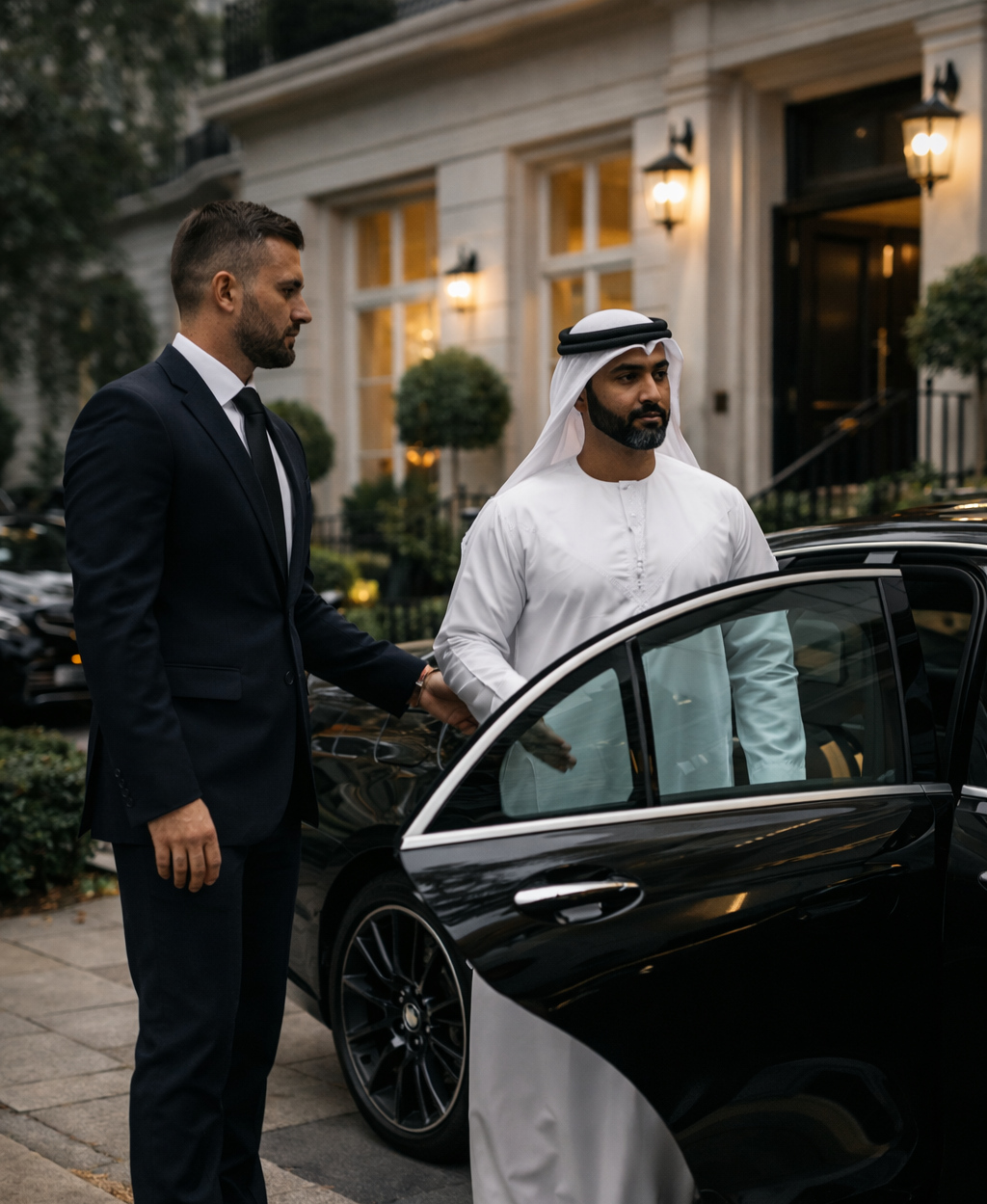
Close protection officers operate under the same legal framework as any other member of the public regarding the use of reasonable force.
This means they can act to protect themselves or another person if necessary, but only within the limits of UK self-defence law.
In practice, professional close protection focuses on preventing confrontation. Situational awareness, route planning and risk assessment are designed to reduce the likelihood of incidents occurring in the first place.
Can you hire a bodyguard for travel, meetings or events?
Yes. Many people assume bodyguards are only used by celebrities or political figures, but that is rarely the case.
In reality, protection is often arranged for specific situations such as:
Business travel
Public appearances or events
Sensitive negotiations or meetings
Periods of increased visibility
Personal safety concerns
Some assignments last only a few hours or days, while others involve longer-term protection depending on the individual’s circumstances.
For executives and high-profile individuals moving through busy environments such as London, close protection often focuses on discreet risk management rather than a visible security presence.
What if you want protection without a visible bodyguard?
Yes. Not all protection needs to be obvious.
In some situations, clients want security delivered from a distance through protective surveillance, where the focus is on discreet oversight rather than a close visible presence. This may be because the principal wants to move freely without drawing attention, or because a family member, adviser or office has asked for reassurance without disrupting the individual’s routine.
In some cases, the person being protected may not even be aware that monitoring is in place. When delivered lawfully and professionally, protective surveillance offers a discreet way to manage risk, identify concerns early and provide reassurance without making security part of the public picture.
Where should you start if you're considering protection?

For many people researching this topic, the first step is simply understanding how professional protection works.
Whether you are exploring security for yourself, supporting a principal as a personal assistant, or managing logistics through a family office, the most important factors are professionalism, licensing and discretion.
Working with a licensed provider ensures that protection is delivered legally, responsibly and with the experience required to manage real-world risks.
If you want to understand the practical side of the process, explore our guide explaining how to hire a bodyguard in the UK and what to expect from professional protection services - Can You Hire a Bodyguard in the UK? Your Guide to Personal Security
A final word
Most people asking whether it’s legal to hire a bodyguard aren’t looking for something dramatic. They simply want clarity before making decisions about safety.
In the UK, professional close protection operates within a clear regulatory framework. Licensed professionals are trained to protect people quietly and responsibly, without disrupting daily life.
Security should never feel intimidating. Done properly, it provides reassurance that someone experienced is thinking about risk before it becomes a problem.
If you would like to discuss personal protection discreetly, our team is always available for a confidential conversation.


Comments